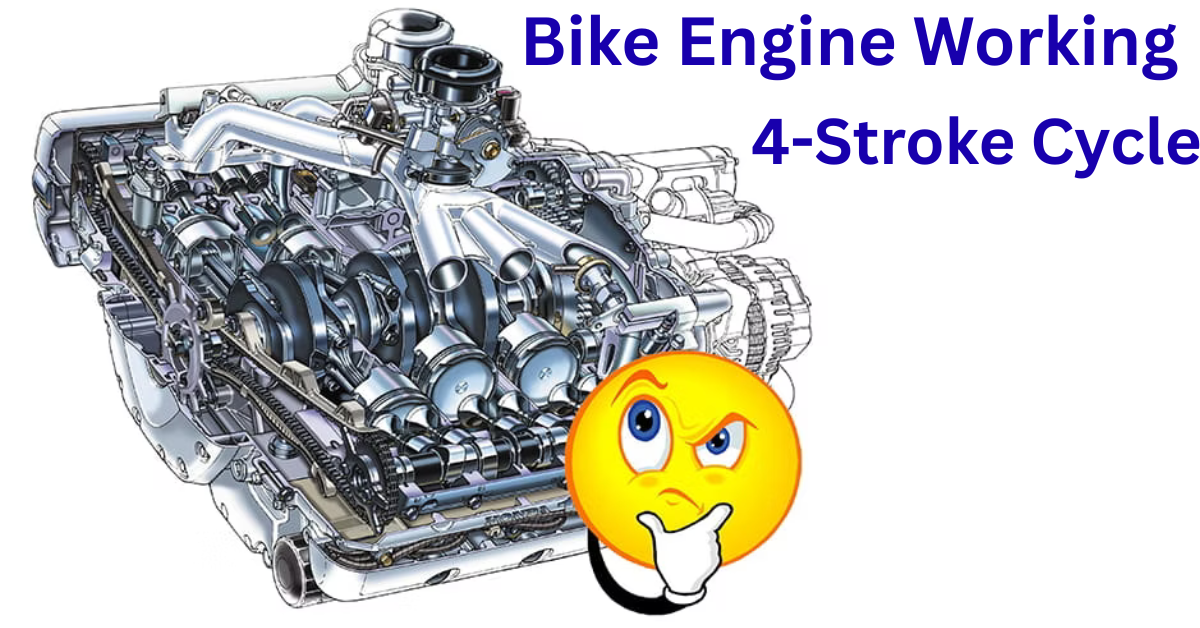
Understanding how a bike engine works can feel confusing for beginners. Many explanations use technical terms that are hard to understand. But in reality, the basic working of a bike engine is simple when explained step by step.
In this guide, you will learn how a bike engine works step by step, using simple language, practical examples, and clear explanations. This article is perfect for students, new riders, and everyday bike owners who want basic automobile knowledge.
What Is a Bike Engine?
A bike engine is the main power source of a motorcycle. It converts fuel energy into mechanical power, which moves the bike forward.
When fuel burns inside the engine, it creates force. This force moves internal parts, and finally, power reaches the rear wheel through the gearbox and chain.
Most modern bikes use a 4-stroke internal combustion engine, which is reliable, fuel-efficient, and long-lasting.
Types of Bike Engines
Before understanding how a bike engine works, you should know its main types.
1. 2-Stroke Engine
- Found mostly in older bikes
- Produces power quickly
- Uses more fuel
- Creates more pollution
2. 4-Stroke Engine (Most Common)
- Used in modern motorcycles
- Better fuel efficiency
- Less pollution
- Longer engine life
👉 This article mainly explains the 4-stroke bike engine, as it is the most widely used today.
Main Parts of a Bike Engine
A bike engine has several important parts that work together. Here are the key components you should know:
- Cylinder – Space where fuel burns
- Piston – Moves up and down inside the cylinder
- Spark Plug – Creates spark to ignite fuel
- Valves – Control air and exhaust flow
- Crankshaft – Converts piston motion into rotation
- Camshaft – Controls valve timing
- Fuel Injector / Carburetor – Supplies fuel
- Engine Oil System – Lubricates moving parts
Each part has a specific role in engine operation.
How Bike Engine Works Step by Step
Now let’s understand the working process step by step.
Step 1: Air and Fuel Intake
The engine first needs air and fuel to create power.
- Air enters through the air filter
- Fuel is mixed with air by the carburetor or fuel injector
- The intake valve opens
- The air-fuel mixture enters the cylinder
This step prepares the engine for combustion.
Step 2: Compression Stroke
After intake, the piston moves upward.
- Both intake and exhaust valves close
- Air-fuel mixture gets compressed
- Pressure and temperature increase
Compression makes the fuel burn more efficiently and produce more power.
Step 3: Combustion (Power Stroke)
This is the most important step.
- Spark plug produces a spark
- Compressed fuel ignites
- Small explosion occurs inside the cylinder
- Piston is pushed downward with force
This downward movement creates power.
Step 4: Power Transmission
When the piston moves down:
- Crankshaft rotates
- Rotational energy is generated
- Power moves to the gearbox
The gearbox controls speed and torque before sending power to the rear wheel.
Step 5: Exhaust Stroke
After power generation:
- Exhaust valve opens
- Burned gases exit the cylinder
- Piston moves up again
Now the engine is ready for the next cycle.
👉 This full cycle repeats thousands of times per minute while the bike is running.
What Is a 4-Stroke Cycle?
The term 4-stroke comes from these four steps:
- Intake
- Compression
- Power
- Exhaust
Each stroke completes one engine cycle.
How Fuel Turns Into Motion
Fuel energy follows this path:
Fuel → Combustion → Piston Movement → Crankshaft Rotation → Gearbox → Chain → Rear Wheel
This process allows your bike to move smoothly.
Role of Engine Oil
Engine oil is extremely important.
It helps by:
- Reducing friction
- Cooling engine parts
- Preventing wear
- Cleaning internal components
Low or dirty engine oil can damage the engine quickly.
Why Cooling System Is Needed
During combustion, a lot of heat is produced.
To control temperature, bikes use:
- Air cooling (common in small bikes)
- Liquid cooling (used in performance bikes)
Without cooling, engines would overheat and fail.
How Gears Help the Engine
Gears help control:
- Speed
- Torque
- Fuel efficiency
Lower gears provide more power, while higher gears help achieve better mileage.
Common Bike Engine Problems (Beginner Awareness)
Understanding engine basics helps detect problems early.
Some common issues include:
- Hard starting
- Overheating
- Low mileage
- Strange engine noise
- Excessive vibration
Early diagnosis saves money and prevents breakdowns.
Why Understanding Bike Engine Is Important
Knowing how a bike engine works helps you:
- Maintain your bike better
- Communicate clearly with mechanics
- Avoid unnecessary repair costs
- Ride safely and confidently
Basic knowledge makes you a smarter bike owner.
Is Bike Engine Working Hard to Learn?
No. You don’t need engineering knowledge.
If you understand:
- Fuel enters
- Spark ignites
- Power is produced
You already understand the core concept.
Frequently Asked Questions (FAQ)
Is a bike engine difficult for beginners?
No. With simple explanation, anyone can understand basic engine working.
Which engine type is best for beginners?
4-stroke engines are better due to low maintenance and fuel efficiency.
Can I learn bike engine basics at home?
Yes. Basic theory does not require tools or mechanical experience.
Does engine speed affect mileage?
Yes. Riding at high RPM reduces mileage.
Understanding how a bike engine works step by step is essential for every bike owner. You don’t need to be a mechanic to understand the basics. With simple knowledge, you can maintain your bike better, save money, and ride confidently.
At Personal Motor Sahai, our goal is to explain automobile topics in the simplest and most practical way possible.